
For years, sales teams relied on a familiar process.
Prospecting. Outreach. Networking. Referrals. Calls. Follow-ups.
The mechanics changed over time, but the principle stayed the same. Growth came from people building trust, nurturing relationships, and staying top-of-mind to potential customers. That has not changed.
What has changed is where those relationships now begin.

We spend much of our lives online. Customers are of course no different. People research products before conversations happen. They form opinions before speaking to a salesperson. They pay attention to the people in their network long before they engage with a business directly.
For organisations with distributed sales teams, especially in industries where people are doing business with people (like insurance, financial services and recruitment) this creates both an opportunity and a difficult operational challenge.
Because while social media can generate visibility, engagement, conversations, and pipeline, scaling it across teams and external agents is not simple.
It requires more than content distribution. It requires consistency, oversight, participation, brand alignment, measurement, and compliance.
Most importantly, it requires a system designed around how sales teams actually work.
That is where SocialKred fits.
Many organisations approach social selling with tools originally designed for marketing departments.
At first, this seems logical. Marketing teams already manage content and distribution. Extending those systems to sales teams appears efficient.
But in practice, distributed sales environments operate differently.
Internal employees, external agents, partners, ambassadors, and regional sales teams do not work like central marketing teams. They have different priorities, different workflows, and different levels of technical engagement.
Their focus is selling. Not navigating complex marketing systems. And this is where many social-selling initiatives begin to break down.
Participation becomes inconsistent. Adoption drops. Oversight becomes difficult. Valuable content goes unused. Teams lose momentum. And organisations are left asking:
How do you scale social selling in a way that encourages participation, while still maintaining visibility, governance, and commercial alignment?
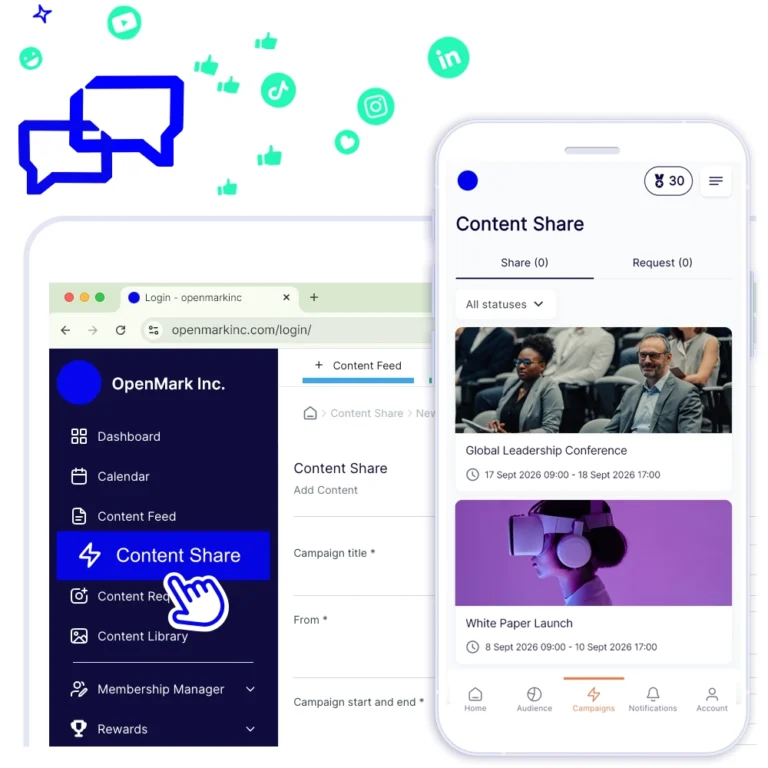
SocialKred was designed specifically for this challenge.
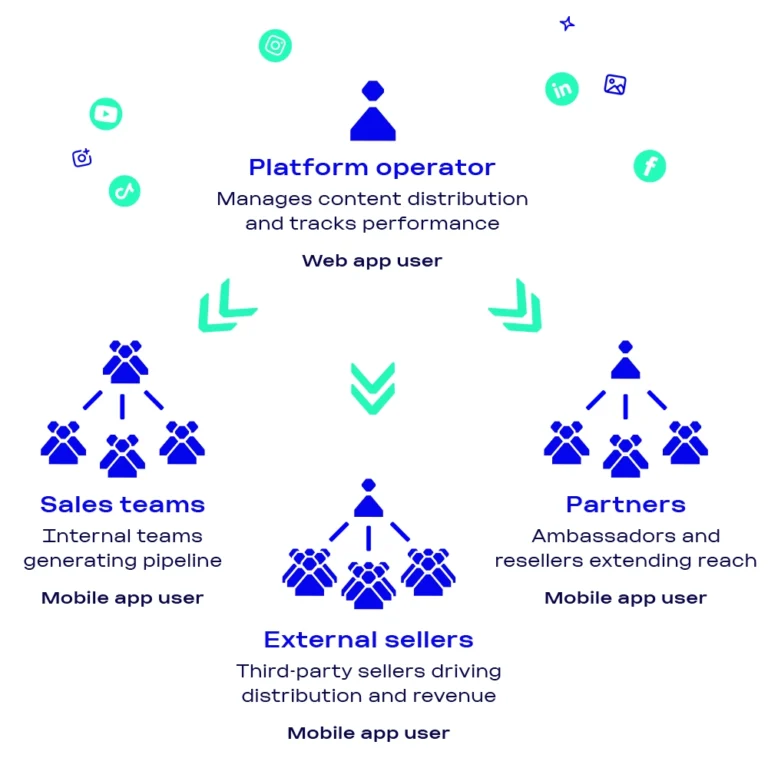
Rather than focusing only on internal teams, the platform supports distributed sales environments that include employees, agents, partners, ambassadors, and external networks.
This distinction matters.
In industries like insurance for example, some of the most commercially valuable relationships exist outside the traditional corporate structure. Agents and external sales networks play a critical role in customer acquisition, relationship-building, and local market presence.
Supporting those networks requires technology that is flexible, accessible, and easy to adopt across multiple operating models.
SocialKred enables organisations to collaborate with both internal and external sales teams through shared content campaigns, while maintaining a consistent brand presence across social channels.
The result is an accessible and scalable approach to social selling.
One of the biggest barriers to adoption in enterprise software is familiarity.
When sales teams are asked to operate inside broad, generic martech platforms, engagement can drop. The platform feels external to the business itself.
SocialKred takes a different approach.
The platform can be fully customised and white-labelled to reflect the organisation’s own brand, creating a dedicated web and mobile experience that feels like an extension of the business.
User participation improves because of it. Teams feel more connected to the platform. A branded experience creates legitimacy, and better long-term adoption across distributed teams.
As organisations scale social-selling activity, oversight becomes increasingly important.
Leaders need visibility into what content is being shared, who is participating, how campaigns are performing, and which posts are generating engagement and click-throughs.
Without that visibility, social selling becomes difficult to measure and even harder to optimise.
SocialKred provides central oversight across distributed activity, helping organisations maintain stronger governance while tracking participation, performance, and lead-generation activity across markets and territories.
This is particularly valuable in regulated industries where compliance and brand consistency are critical.
Social selling cannot operate as an uncontrolled activity. It needs structure without creating friction.
One of the reasons social-selling initiatives fail is that they often introduce too much operational complexity.
The process becomes difficult. Sharing becomes laborious. Participation feels like extra work. And sales teams disengage.
SocialKred was designed to reduce that friction.
The platform supports a social-first, user-friendly experience built around how people already use social platforms in their daily lives.
Lower friction drives adoption. Adoption increases participation. Participation strengthens network effects and improves sales pipelines.
And because the experience aligns with existing social behaviours, sales teams can stay focused on social selling rather than learning complex workflows.
In many organisations, content distribution operates as a one-way process.
Marketing creates content. Teams receive it. Distribution happens.
But sales environments are dynamic. Teams in the field often understand customer questions, objections, and opportunities faster than central departments.
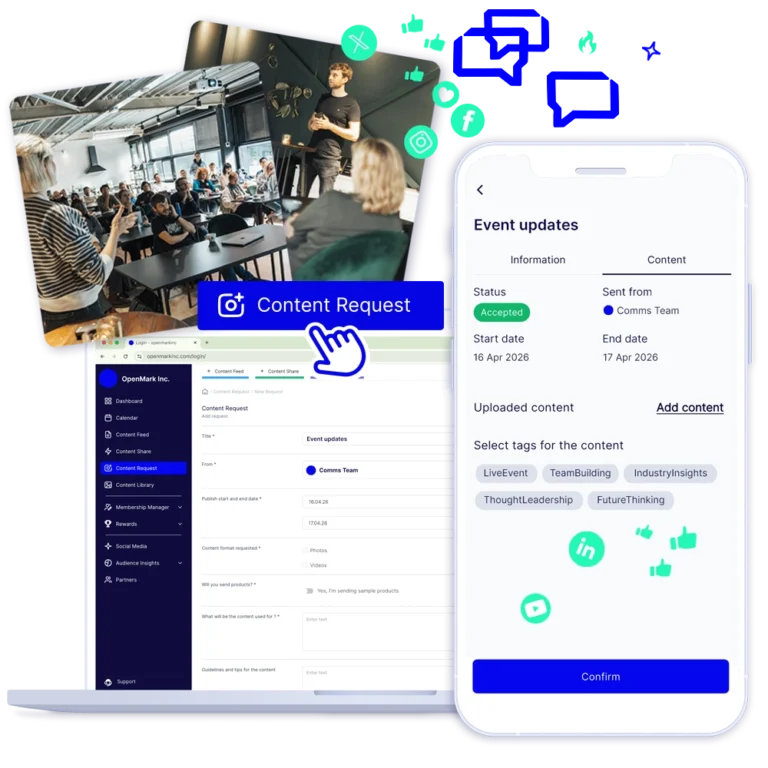
SocialKred supports two-way communication within the platform, that includes both distribution and feedback from sales teams themselves.
The platform can also function as a communication hub, supporting live updates, campaign priorities, business insights and success stories, across distributed teams.
This helps organisations create more relevant content while strengthening communication between central teams and distributed networks.
The result is not simply more content. It is informed, insight-driven content. Which is better content.
Participation is one of the most overlooked elements of social selling.
Even the best content strategy will struggle if teams are not consistently engaged.
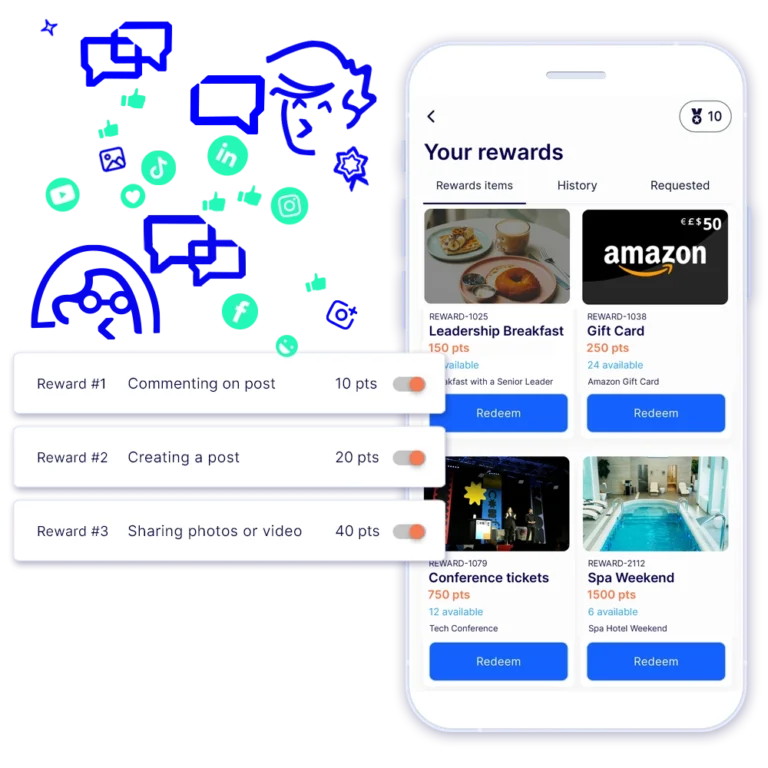
SocialKred addresses this through Rewards and Leaderboards designed specifically for sales-oriented environments.
These features help organisations encourage ongoing participation while reinforcing the behaviours that drive leads, conversations, and commercial outcomes.
But the goal is not gamification for its own sake. The goal is alignment between engagement and measurable business activity.
One of the biggest misconceptions in enterprise software is that deployment equals success. It does not.
Real adoption requires strategy, structure, planning, optimisation, and ongoing support.
That is why SocialKred combines technology with consultative guidance.
The SocialKred team works directly with organisations to help structure, launch, and optimise social-selling activities and goals.
This creates a smoother rollout, stronger adoption, and a clearer path from implementation to measurable commercial impact.
The challenge facing modern sales organisations is no longer simply how to distribute more content across social media.
It is how to turn distributed sales teams into an effective, measurable, and brand-aligned social-selling engine.
That requires more than isolated tools or disconnected workflows. It requires a platform purpose-built for the realities of distributed selling.
SocialKred provides an enterprise-grade approach to managing and scaling social selling across internal teams, external agents, partners, and broader sales networks.
For organisations looking to improve lead generation, increase participation, strengthen oversight, and scale social-selling activity in a structured and measurable way, the opportunity is here.
Because social selling is no longer an emerging trend. Today, it’s a core capability of customer acquisition.