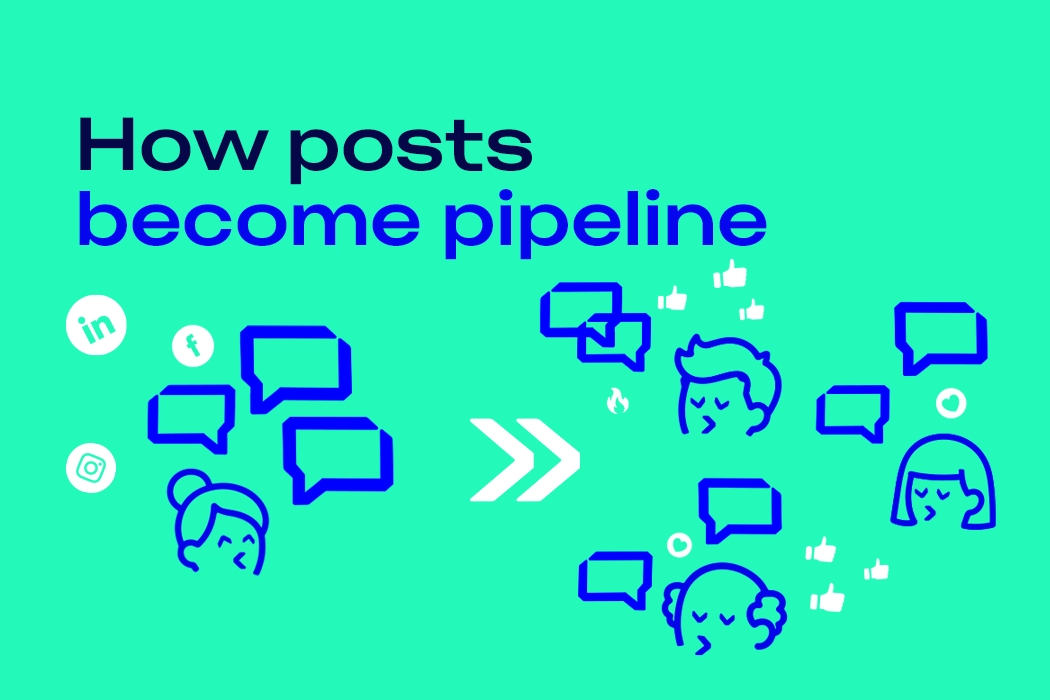
Social selling, it isn’t about pitching. Well it is, sort of. Just not in a salesy way.
This sounds counterintuitive, but bear with us.
A great LinkedIn post isn’t going to result in an instant lead. Nor are the people posting it going to become influencers overnight.
Social selling is about building familiarity, credibility, and trust before someone enters a buying journey.
For B2B businesses, that means consistently demonstrating expertise, engaging with your industry and helping prospects solve problems. So that when they eventually need your services or products, your company is top of mind.
The biggest mistake companies make with social selling is assuming it’s all about creating content. In reality, successful social selling is a combination of publishing, engaging, and building relationships over time.
Here’s how to approach it.
Firstly, share content that helps buyers make better decisions.
No one wakes up looking for a product or service update. They do however want insight into their industry, solutions to problems and evidence that you understand the challenges they’re facing.
Some of the most effective content types include:
Educational content
Explain how something works, simplify a complex subject or answer frequently asked questions. Think practical advice rather than theory such as:
- Industry explainers
- Step-by-step guides
- Common mistakes to avoid
- Regulatory or technology updates
Customer stories and case studies
Nothing builds credibility like demonstrating results.
Instead of simply saying your solution works, show how your organisation overcame a challenge and what changed afterwards. And if you can collaborate with your clients on this, this adds weight to your claims.
Opinion and commentary
People listen to and follow people, because they offer perspective beyond the clinical company line.
Share your thoughts on industry news, emerging trends or changes affecting your customers. Don’t be afraid to take a position if you can support it with data and experience (within your company’s guidelines, of course).
Behind-the-scenes content
Buyers increasingly want to understand the people behind a business.
Content showing project work, team collaboration, events or even lessons learned helps to humanise your organisation.
Personal experiences
One of the strongest performing formats on social media is personal storytelling.
What have you learned recently? What surprised you? What would you do differently? These posts attract meaningful conversations because they’re authentic, rather than promotional.
Original research and data
If your business has access to unique insights, publish them.
Whether it’s survey results, campaign data or industry benchmarking, well-researched information positions your business as a source of expertise, rather than simply another service provider.