A few enthusiastic social media posters isn’t enough to build a
successful social selling programme. Real impact requires structure, consistency, the right technology, and data.
Before we dive in, here are the key forms of social selling we’re focusing on:
Sales teams
Empowering your sales team to share and amplify content on social channels.
External sellers
Enabling third-party sellers, like agents, to co-promote your message and extend your reach.
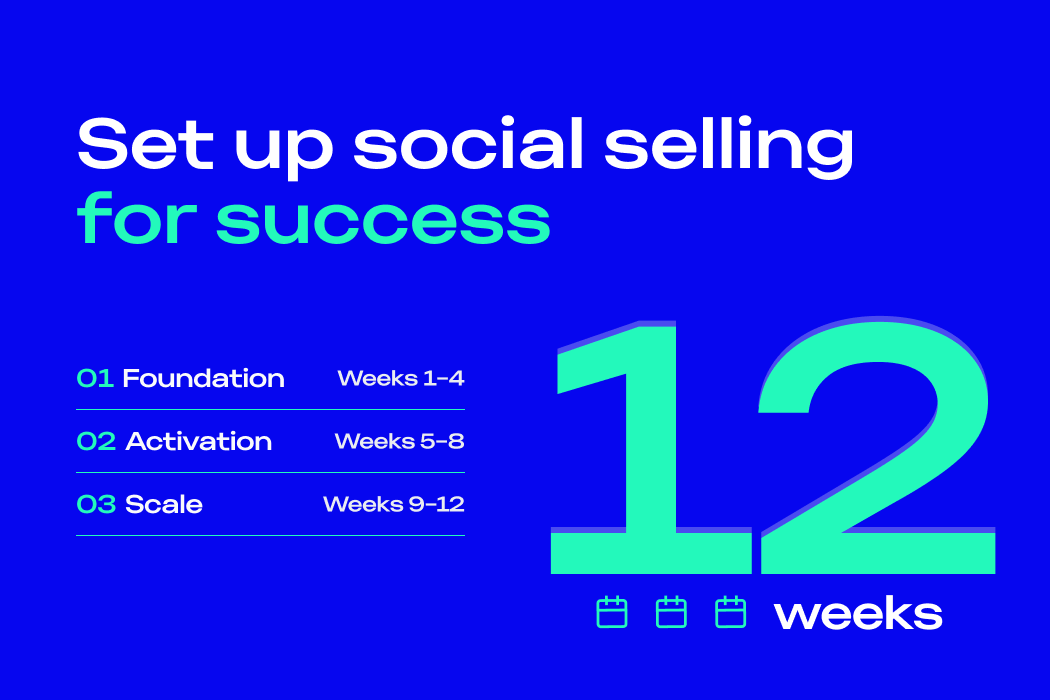
This guide is all you need to go from a cold start from strong foundations to activation, optimisation, and scalable success in 12-weeks, divided into 3 simple phases.
PHASE 1: Foundation (weeks 1-4)
The goal of this phase is to build the structure and internal culture needed for success.
1. Setup and onboarding
Firstly, this needs a place to live, a basecamp or hub. Establishing a central platform to manage content distribution, participation, and performance is essential when considering control and scale.
Provide clear setup guidance so your participants know what to expect, and are ready to share when campaigns launch.
Define objectives early, ensuring content campaigns are built with measurable ROI in mind.
Give your programme of activity a name and identity. And consider using rebrandable white label technology, to reduce friction and improve adoption—platforms like SocialKred support this.
2. Define tone of voice and communication guidelines
Develop clear guidance to ensure consistency without restricting authenticity.
The best programmes favour alignment over control, so participants feel confident and free to engage. Always include:
A central document with do’s and don’ts, including how to handle sensitive topics, customer interactions, and what should remain confidential.
Create and share tone of voice principles, with guidance on style (e.g. friendly, informal, formal, authoritative).
You might also want to share visual guidelines with examples of posts, imagery, video, and formatting best practices. Your marketing team may have examples of best performing Linkedin posts.
3. Identify pilot champions
Not everyone will adopt this right out of the gate.
So select a group of people to champion social selling across your organisation. This pilot group will help refine your approach before a wider rollout.
Consider inviting senior sales leaders to build credibility and visibility, subject matter experts for thought leadership and marketing team members for content fluency.
4. Offer training to pilot advocates
Deliver practical, hands-on training. Again, your marketing team or social media manager should be able to provide useful guidance.
Topics could include how to:
- Optimise your social profile to maximise reach
- Write strong hooks and structure posts effectively
- Engage your network through liking, commenting, and resharing
5. Agree incentives
Sales people love incentives. Need them in fact.
So from the get go, set clear expectations for how participation is measured and recognised, and what’s in it for your salespeople.
This could be a greater percentage of commission for self generated leads, an extra day’s holiday or a weekend away all supplemented by additional social visibility and career growth.
This can be visible via a top 5 leaderboard to encourage (friendly) competition.
6. Build messaging pillars and define cadence
Establish key messaging pillars aligned to commercial priorities. There are 3 key messaging pillars that should be included as standard:
- Industry thought leadership
- Client success stories
- Product or service innovation
Then determine your posting cadence on a weekly and monthly basis.
PHASE 2 Activation (Weeks 5–8):
This phase focuses on driving momentum, increasing visibility, and integrating advocacy into your organisation’s culture.
1. Launch internally, but treat the launch as a strategic initiative (not a quiet rollout)
A launch should include a presentation from leadership, clearly outlining the value for both the sales and marketing teams, as well as the wider organisation.
2. Coordinate via a content sharing calendar
Ensure coordination between the content administrators and all participants. Where possible, distribute posts 24–48 hours in advance encouraging posting within high-engagement windows. Your marketing team may already know when engagement is best but Tuesdays and Thursdays are effective posting days for Linkedin.
Also, coordinate around priority moments such as product or service launches or other key events.
3. Weekly prompts and content suggestions
Maintain momentum with insight-driven ideas and creative nudges,
You might include:
- “Thought Leadership” prompts
- Industry commentary suggestions
- Behind-the-scenes content ideas
- Story frameworks
4. Track, share and celebrate activity
Make participation visible by celebrating:
- The most consistent posters
- The posts with the highest engagement
- The fastest growing profiles
- Best comments (not just posts)
PHASE 3: Scale (Weeks 9–12)
This phase shifts from activation to systematisation and impact measurement.
1. Track and measure performance
Move beyond early-stage goals to performance insights.
Metrics may include:
- Posting participation rate
- Landing page traffic from member posts
- Sales funnel and pipeline uplift
Sales managers can begin to channel their inner marketing manager by learning from data driven insights including but normally limited to:
- A monthly performance dashboard
- Top-performing themes or topics
- Recommendations to continuously improve
2. Expand participation and success
Encourage a mix of light, active, and highly active members, supported by ongoing training, to steadily grow engagement.
Share internal success stories to reinforce value. Examples might include:
- Sales execs that have generated prospect meetings through social selling activity
- Inbound leads driven by through social selling activity
- Promotion or offers sign-ups driven by social posts
- Package these into internal reports and share them across the organisation to continue to build social selling momentum.
Final word:
While every business has varying challenges and opportunities, there is a relatively linear path from the occasional social post to a focused sales team of social sellers.
Follow this guide, bring your marketing team along for their input and watch your pipeline grow.