To many, the term social selling is relatively nascent, but it has existed in various forms for a number of years. Some of the world’s most recognisable brands and companies have embraced the power of not just salespeople, but their entire organisation to grow and impact their sales pipeline.
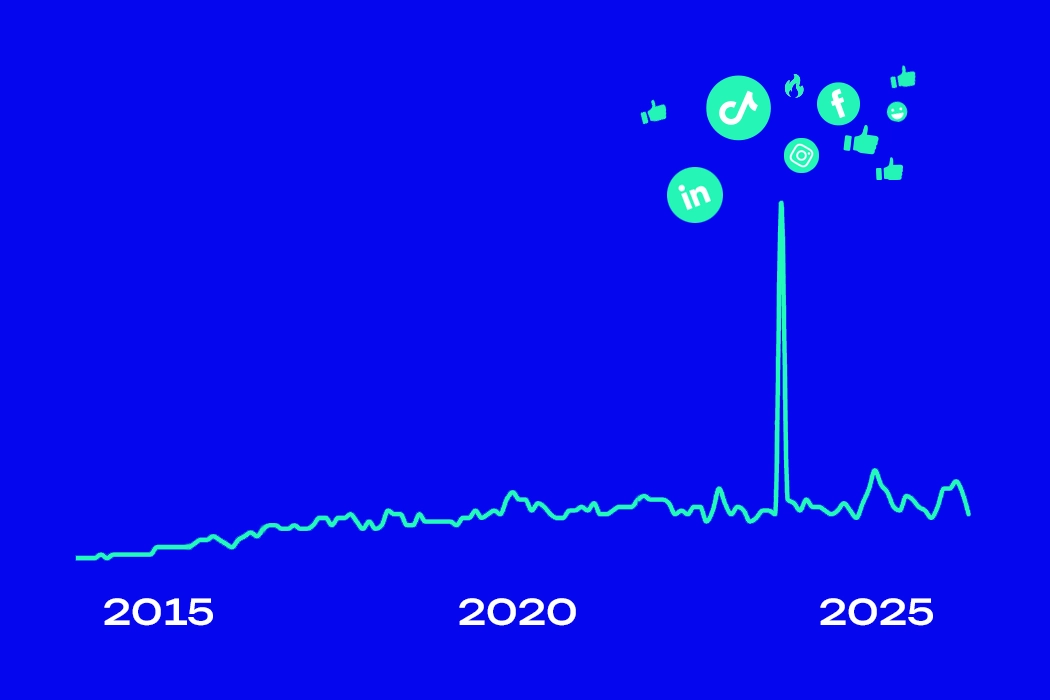
A fairly cursory examination of Google keyword volume can tell you that social selling as a term is still pretty undercooked.
The search term social selling itself has grown relatively slowly, but is inexorably growing.
In December 2023, there was a huge spike around people searching for social selling. While it is hard to pin down exactly why this might be, there are a number of factors that could have caused this.
2023 was the year that generative AI probably permeated into mainstream business use, with vendors promoting AI for prospecting, content creation, and relationship building tools.
All of these tools were created to help companies scale their social selling efforts, hence the increased level of curiosity around the subject. In addition, there are a number of major social developments across platforms, such as investing in shopping and creative monetisation tools, TikTok’s expansion of creator and commerce features.
There is, of course, always a grey area and levels of ambiguity. Social selling means different things to different people.
For some, social selling is specific to influencer marketing or businesses selling their artisanal products or market-leading services via third-party content creators.
And while influencer marketing has rightly stolen the headlines as an antidote to static placements and increasingly expensive paid search ads, in the background, some of the brightest and the best have engaged in social selling on a huge level, baking it into the culture of their business.
We’re going to take a look at a few of them.
It’s worth caveating, it’s hard to find deep revenue-generating data for many of these examples – it’s not the type of information financial directors willingly part with – but we’ll do our best.
Let’s start with IBM. They’re amongst the best examples to really embrace social selling en masse. The key aspect to IBM’s approach is that it’s entirely voluntary, but incentivised. IBM set up central resources so anybody can become a thought leader/influencer to promote IBM.
The results? 1,000’s of participants joyously flying the blue flag via the Blue IQ program. This programme has its roots in blogging, encouraging IBMers to emphasise problems and solutions instead of merely pushing products.
Then there’s Dell, who proudly claim to have trained over 5,000 employees in the not so mystical arts of social selling.
As with IBM, Dell has provided clear guidance and guardrails, breeding confidence from everybody engaged. Dell appreciated this fact and set out to make it easy for everybody, giving guidance on how to post on LinkedIn to their employees (without mention of charity runs or humble brags). Dell have even published a white paper, which is publicly available.
Dell also understand the importance of momentum and continuity. This gave rise to “Dell Champions” – a leaderboard linked to rewards, to keep everybody on top of their game via friendly (we assume) competition.
Both LinkedIn and Salesforce also have very active social selling activity by their employees, but let’s face it, from those two, you would expect that it will be rather remiss of them, so that’s hardly news.
There are a number of moving parts to successfully implementing a culture of social selling in a business. From training to tracking, from co-creating to incentivising, this can take a herculean effort in coordination alone. And it’s exactly where and SocialKred does the heavy lifting.
The best coordinated social media programmes share a clear purpose and identity, while being executed by an increasingly larger, more visible and respected sales team. Time should not be spent on admin and measurement, over and above content, creativity, and relationship development.